


Luxury Vinyl Tile (LVT) and Luxury Vinyl Plank (LVP) have become popular flooring options because they are available in a wide range of styles, are relatively affordable, and are often easy to install. These products are manufactured using synthetic materials, including vinyl and plasticizers, and are commonly selected for their durability and versatility. When choosing flooring, it is helpful to consider not only appearance and cost, but also the materials that become part of your everyday living environment.
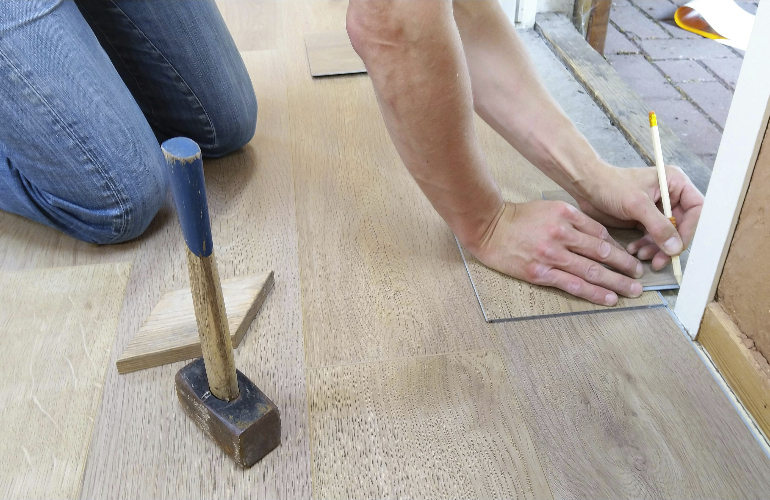
Here are some material and design considerations to explore before making a decision:
Material composition LVT and LVP are typically manufactured in layers: a backing layer, a rigid or flexible core made from PVC (vinyl) and plasticizers, a printed design layer that mimics the look of wood grain, stone, or tile, and a protective wear layer on top. This layered construction is what allows the material to be produced at a lower cost while offering a wide range of visual styles. Installation methods vary as well, from click-lock planks that float over the subfloor to glue-down or loose-lay systems, each with different maintenance and replacement considerations.
Indoor air quality Like many synthetic materials, vinyl flooring can emit volatile organic compounds (VOCs), particularly in the weeks after installation, sometimes noticeable as a distinct new-flooring smell. If indoor air quality is a priority for you, look for lower-emission certifications, when selecting vinyl products, and increase ventilation during and after installation. Natural materials such as wood, tile, and stone generally do not have this same off-gassing period, which is one reason you might factor air quality into your overall material selection.
Durability and repairability Durability looks different depending on the material. LVT and LVP are manufactured to resist everyday wear, but when your floor is scratched or chipped, the damaged plank or tile typically cannot be repaired and needs to be replaced. Hardwood, by contrast, can be sanded and refinished multiple times over its lifespan, allowing scratches and wear to be addressed rather than replaced outright. Tile and natural stone are also highly durable, and individual pieces can often be repaired or repolished rather than requiring a full floor replacement.
Manufacturing and environmental footprint Beyond performance, you might also weigh how a material is produced. Manufacturing PVC-based flooring is a resource- and energy-intensive industrial process. Natural materials such as wood, stone, and tile involve their own extraction and fabrication methods, with a different environmental profile, and you may factor this in alongside how each material is eventually disposed of at the end of its life.
Considerations for children's spaces Because children spend a lot of time on the floor, crawling, playing, and sitting for extended periods, you might prioritize a warm, comfortable surface underfoot in play areas and bedrooms. Natural materials like hardwood paired with area rugs, or cork, offer a softer, warmer surface for play, while still being relatively easy to clean up after spills and everyday messes. Durability also matters in high-activity spaces, so you may want to weigh how well a material holds up to daily wear against how easily it can be repaired or refinished over time, rather than replaced outright.
Look and feel Beyond performance, you may be drawn to how natural materials feel underfoot and to the touch. Wood in particular tends to feel warmer to the touch than vinyl, which can feel cool underfoot, especially in colder months. Natural materials also bring a depth of grain, texture, and color variation that is difficult to replicate synthetically, contributing to a warmer, more grounded feel in a room.
What are the natural material alternatives? Instead of LVT or LVP, you might explore natural alternatives such as hardwood, which can be refinished over time, ceramic tile, porcelain tile, or natural stone. Each offers its own durability, repairability, aesthetic, and a piece of nature you can bring in your home.
The main takeaway is that flooring materials become part of your everyday living environment, and are worth evaluating for more than appearance and cost alone. Natural materials like hardwood, tile, and stone tend to hold up best against that closer look: they can be repaired or refinished rather than replaced, they skip the off-gassing period synthetic materials go through, and they bring a warmth and texture that is difficult to replicate. When you weigh those factors alongside appearance and cost, natural materials are often the better choice for your home.